Home Spa · Design
Home Spa Design
Good bathroom design is, in the end, three problems solved well: the proportion of the room, the temperature of the light, and the character of the water.
One
Proportion — the geometry of a slow room
A bathing room feels calm when its proportions feel resolved. Ceilings taller than the average corridor. A tub placed so that its long side, not its end, faces the room's most beautiful surface. A generous stretch of empty wall behind it. Storage recessed rather than protruding.
The rule of thumb we use with interior designers: the tub should sit inside a rectangle of empty space at least 400mm larger than itself on every side. That single decision does more for the ritual than any single fitting choice.
Two
Light — the single most under-considered element
Cold, high-CRI ceiling lighting is the enemy of the home spa. The remedy is layered warm light: 2400K–2700K, dimmable, and positioned low. A single wall wash near the tub, a low pendant or sconce nearby, and a candle within reach is the recipe most of our designers converge on.
The specification is small but strict. Colour temperature under 2700K. CRI over 90. All fittings on a single dimmer. No downlight directly above the tub, ever.
“Good bathroom design solves three problems: proportion, light, and the character of the water.”
Three
Water — the character that changes everything
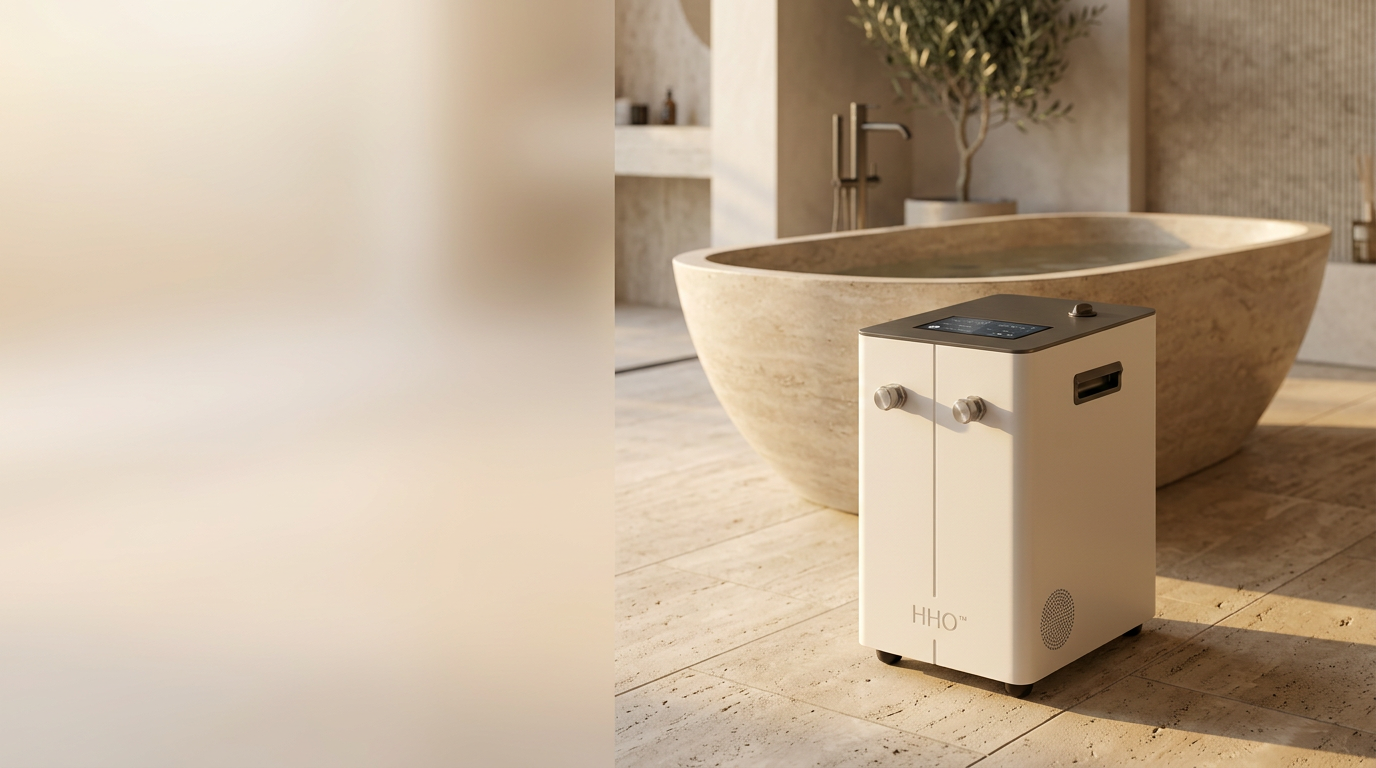
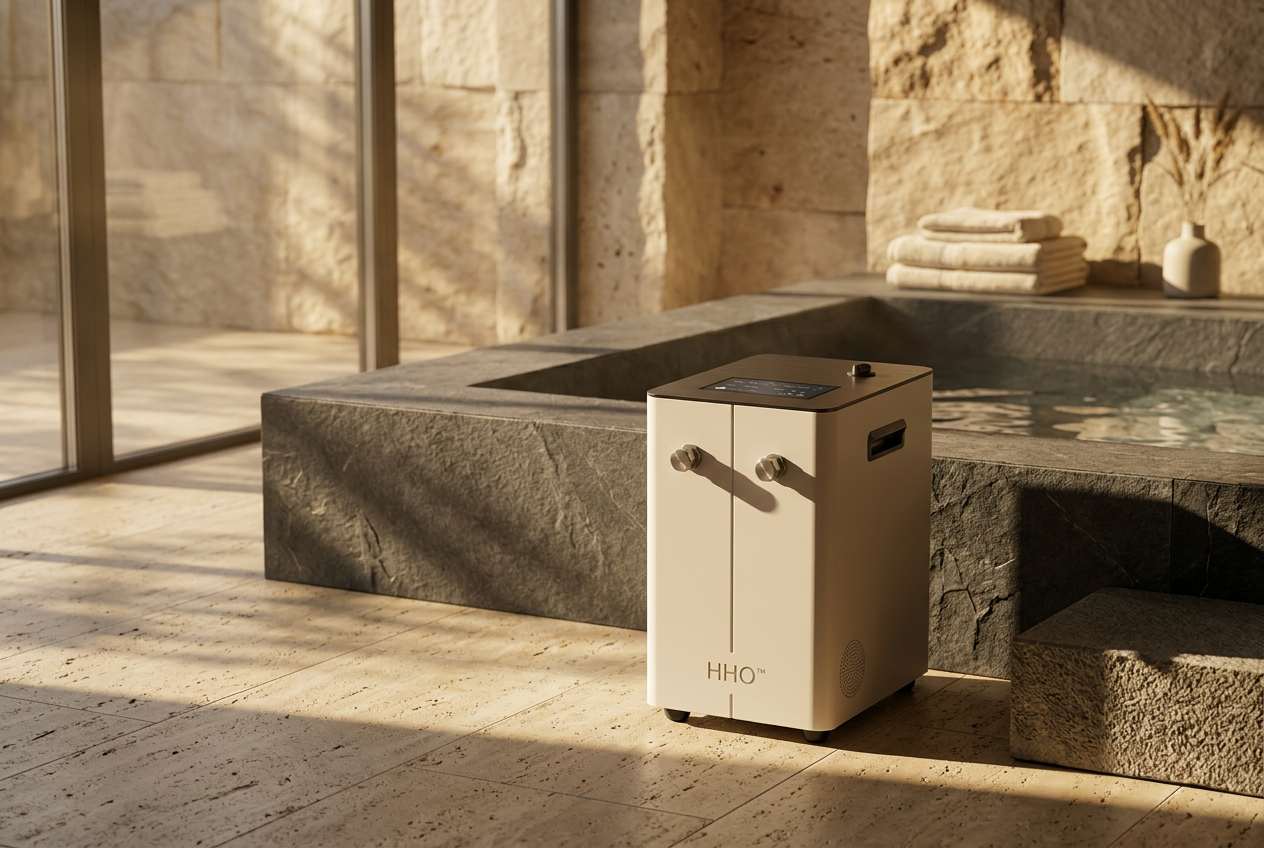
The last consideration, and the one modern homes are only now catching up to, is the character of the water itself. A hydrogen bath system enriches ordinary bathwater with dissolved molecular hydrogen — invisible, odourless, and central to the softer texture of the ritual.
The appliance sits at the side of the tub and requires no plumbing changes. In design terms, this is the ideal: a discreet object, quietly placed, that changes the room's most important surface without touching the rest of it.
Engineering & specification
The engineering brief lives on HydrogenMachines.com.au
Cell architecture, hydrogen output, certifications, warranty and commercial specifications are documented in full on our sister site — written for architects, spas and buyers who want the technical depth.
Visit HydrogenMachines.com.au →Questions
Considered answers
- Where should a hydrogen bath appliance sit in a designed bathroom?
- Beside the tub on the plumbing wall — a small, quiet appliance approximately the footprint of an occasional stool. Most designers place it low, in shadow.
- What lighting temperature best suits a home spa?
- Between 2400K and 2700K, high CRI, dimmable, layered low. Never a downlight directly above the tub.
- Which materials work best around a hydrogen bath?
- Honed stone, unfilled travertine, oak, brushed brass, and thick woven linen. The palette is short and warm.
- Do I need to renovate to build a home spa?
- No. Most of the design change is lighting, textiles and edited surfaces. A hydrogen bath system adds without requiring plumbing changes.
The Pillar
Return to Hydrogen Bathing
Related Content
More design studies
From proportion to material — the quiet decisions.
Hydrogen Bathing Explained
What a hydrogen bath is, how the machine works, and what to expect from your first session.
Creating a Home Spa Experience
How to design a beautiful, immersive home spa around a hydrogen bath system.
Choosing a Hydrogen Bath Machine
A buyer's framework for selecting a premium hydrogen bath system.
Bath Preparation Guide
How to prepare a hydrogen bath session for the best experience.
Hydrogen Bath Machine Buyer's Guide
What to look for in a premium hydrogen bath system for the home.
Hydrogen Bath Water Machine Buyer's Guide
Choosing a hydrogen bath water system — fine-bubble output, build and ownership.
Bath One™ Hydrogen Bath Machine
Premium hydrogen-rich bathing system for the home spa.
H6 Pro™ Multi-User H2 Inhaler
6,000 ml/min separated H₂ + O₂ inhalation. Up to three cannulas.
Find Your Wellness System
Five short questions — one tailored recommendation across inhalation, bathing and water.
What is hydrogen bathing — and how does it compare?
Hydrogen bathing dissolves H₂ into bath water, where it can be absorbed transdermally and inhaled in low concentrations from the steam above the bath. The dose …
What is a molecular hydrogen machine?
"Molecular hydrogen machine" is the generic engineering term for any device that produces molecular hydrogen (H₂) — the smallest stable molecule in nature. It c…