



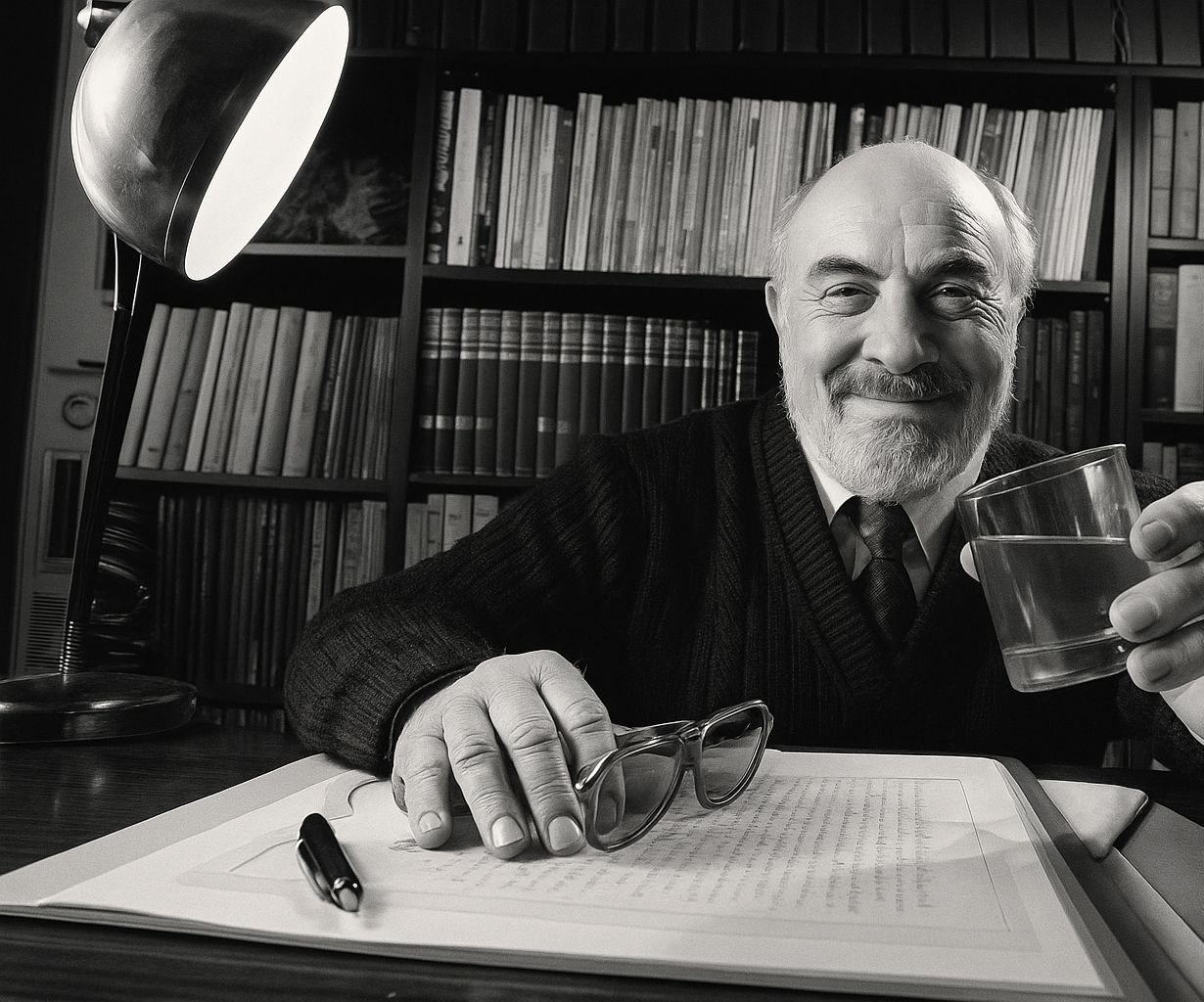
In 1981 I sat behind the desk in Bernard Benson's castle in the Dordogne — a few kilometres from the Lascaux caves, where human beings painted with astonishing sophistication seventeen thousand years before the first transistor was switched on. Benson was an early computing pioneer, author, and one of the quietly remarkable minds of the twentieth century. We talked about what machines would eventually become. Not the machines of that moment — the room-sized processors and green-screen terminals of the early computing age — but what they would become when the architecture caught up with the idea.
I left that conversation with a clear picture in my mind: a personal research instrument of extraordinary power, available to anyone, capable of compressing decades of inquiry into hours. I didn't know when it would arrive. I knew with certainty that it would.
That picture stayed with me for forty-four years. You are reading this on the instrument I imagined.
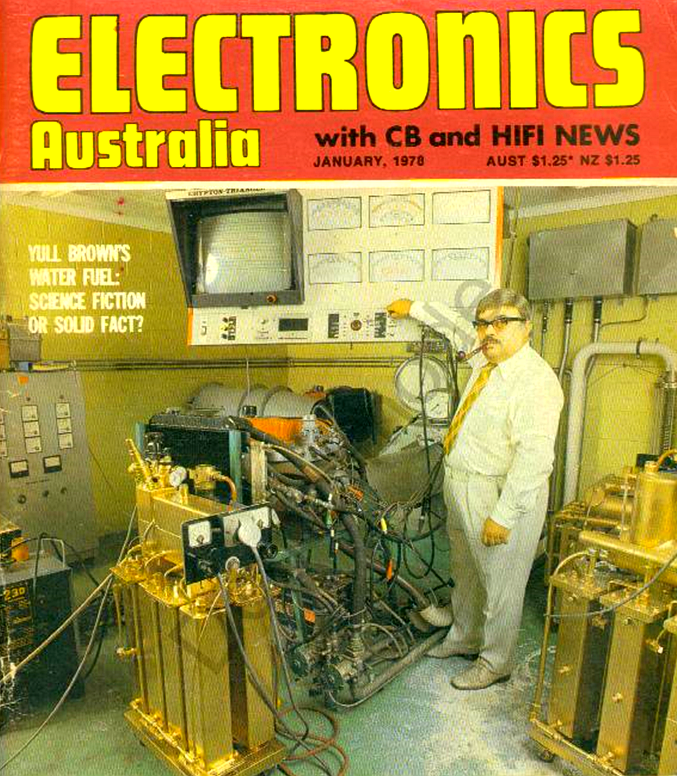
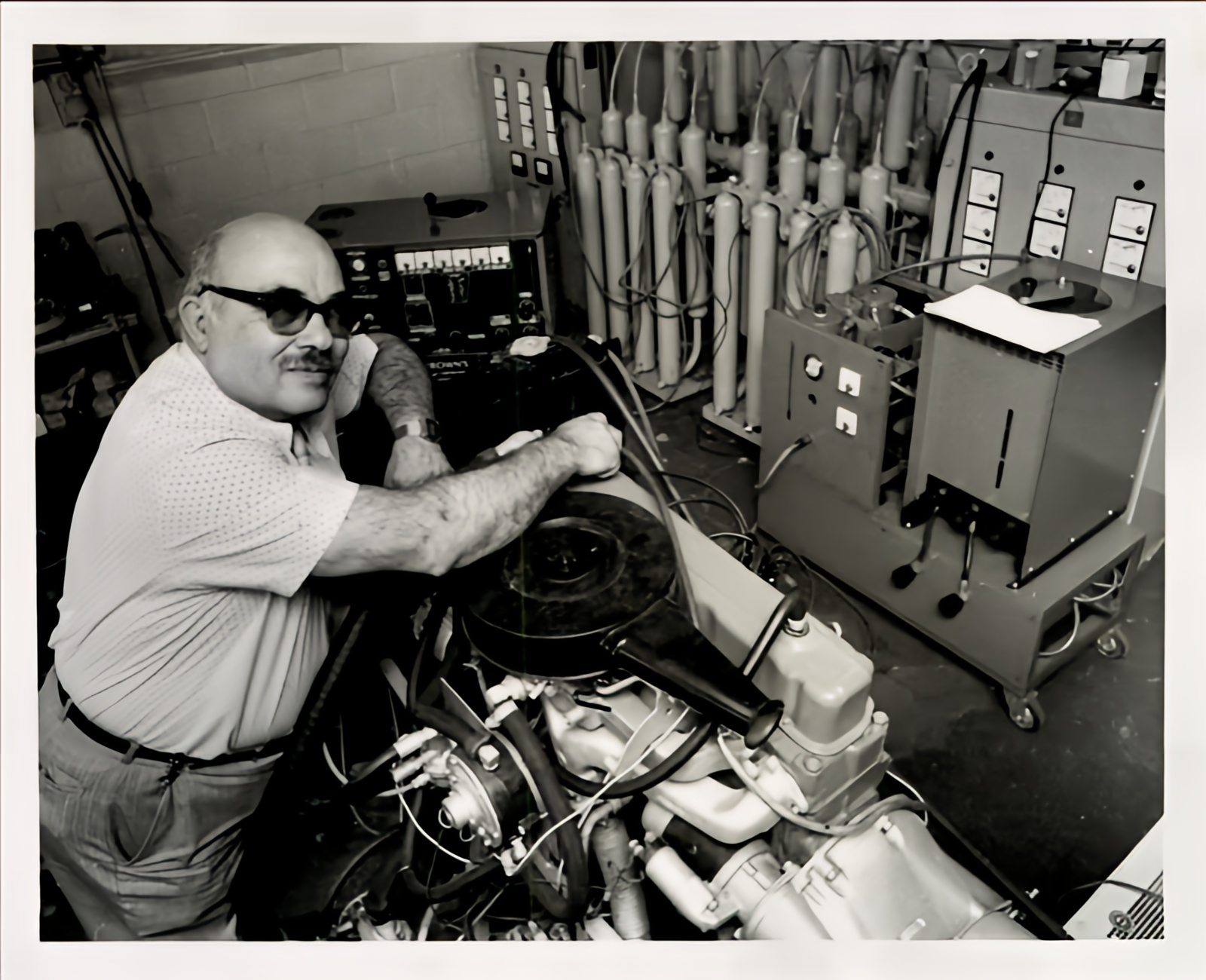
Four years later, in 1985, I met Yull Brown at his home in Concord — a quiet suburb of Sydney, an unlikely address for a man who was rewriting combustion physics.
Brown was an inventor of singular conviction who had spent decades proving that oxyhydrogen, the mixed gas produced by the electrolysis of water, behaved in ways that conventional combustion theory could not fully account for. He was promoting his Water Fuel Holdings company and he was paying for it — under sustained attack from vested interests who had every commercial reason to ensure his work remained marginal. The established fuel supply chain does not welcome a man who can run a cutting torch on water.
He was dismissed by most of the scientific establishment. He kept working anyway.
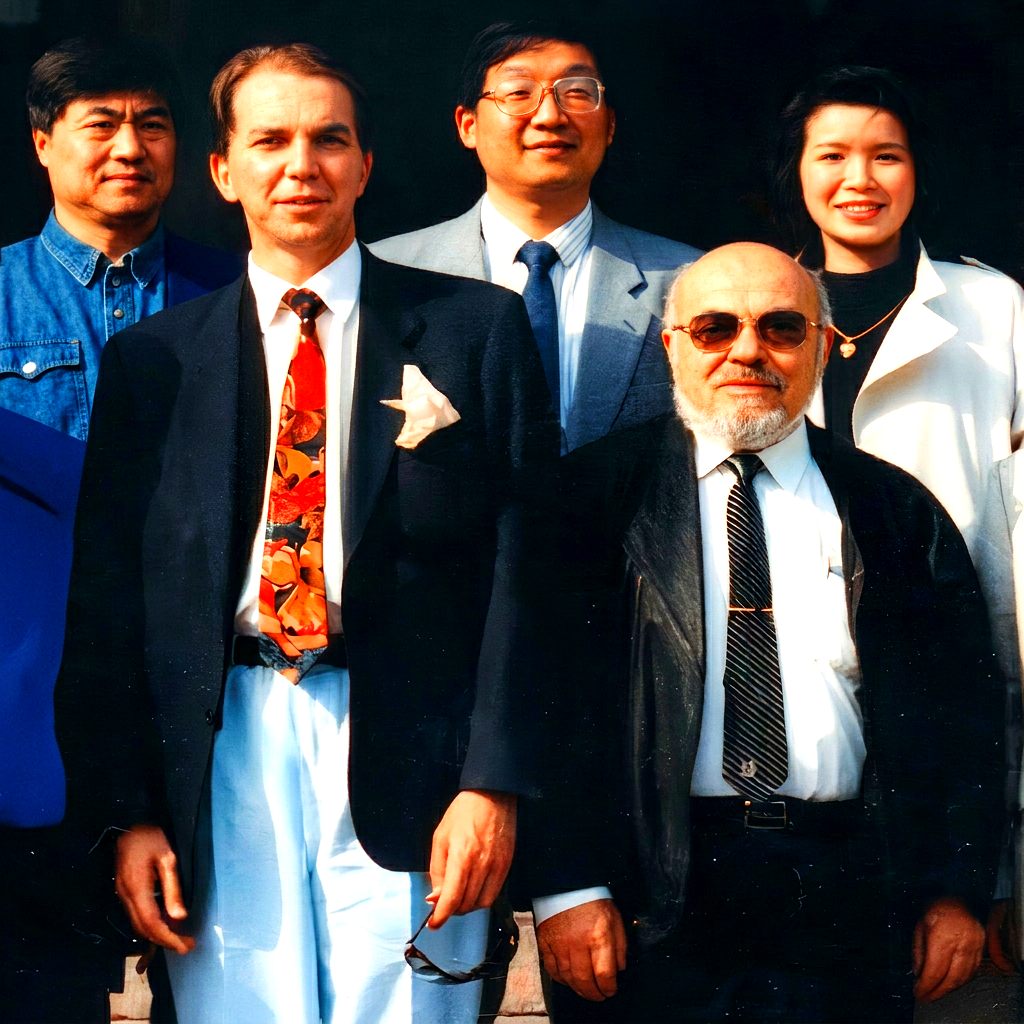
In Beijing, over a quiet conversation far from the laboratories and the critics, Yull told me how it had all begun. He was a religious man. In pre-war Europe, inspired by reading the Bible, he had prayed — genuinely, privately prayed — to be shown the secrets of water. To understand how water might be turned into fire. That was the question he put to God in the years before the world tore itself apart.
The answer, as he understood it, came. And he spent the rest of his life proving it.
His postulate became real. Not in the way the establishment expected — not in the tidy language of peer review and institutional approval — but in sparks, in flame, in a cutting torch that ran on a gas produced by splitting water. The physics worked. The man who had prayed for the answer kept working until the world could see what he had been shown.
But Beijing was not the full story of that journey.
From Beijing, Yull travelled to Baotou in Inner Mongolia — to Institute 52, a classified Chinese scientific research facility. In that laboratory, behind closed doors, he demonstrated something that went well beyond cutting torches and combustion efficiency. He showed that oxyhydrogen gas could reduce radioactivity.
This was 1991. Chernobyl was five years behind the world and still very much in front of it. The Chinese scientists at Institute 52 measured the result. Their instruments confirmed a 93% reduction in radioactivity. They wrote it down. They produced a report.
I received a copy of that report. I faxed it to Maurice Strong — at the time the most influential environmental diplomat on earth, the architect of the Rio Earth Summit, the man who had placed climate and energy at the centre of the global agenda.
The doors did not open.
Nuclear waste storage is not a problem the world is trying to solve. It is a business. A perpetual, protected, extraordinarily lucrative business built on the assumption that radioactive material cannot be neutralised — only contained, monitored, and stored, indefinitely, at enormous cost, by the same interests that produced it. A 93% reduction in radioactivity, demonstrated in a classified Chinese laboratory, transmitted to the United Nations, represented not an opportunity but an extinction-level threat to that business model.
The doors slammed shut. Yull kept working anyway.
In 1998 I was with him at Auburn Hospital on a Friday night, right up until the end. His last words to me were simple.
"Go and have some fun, my son."
He passed away that night. The physics did not pass with him.

The vision after the funeral
Brown had given me the physics. The question that remained — the one I carried out of Auburn Hospital that Friday night — was not whether oxyhydrogen worked. I had seen it work. The question was how to deliver it to the world at a scale that matched the problem it was built to solve.
The problem I had in mind was not a small one. Thermal power plants burning coal are the single largest source of industrial emissions on earth. No practical, non-disruptive solution existed for reducing the emissions intensity of an operating coal fleet without shutting it down. Governments were not shutting it down. The fleet was running, and running badly — well below its own thermodynamic potential, producing more pollution per megawatt-hour than the physics of the fuel actually required.
Oxyhydrogen combustion enhancement, properly engineered and deployed, changes that equation. The emissions intensity drops. The heat rate improves. The plant burns less coal to produce the same output.
The physics had been demonstrated. What had not been demonstrated was commercial deployment at industrial scale.
That became the mission.
"The physics had been demonstrated. What had not been demonstrated was commercial deployment at industrial scale."
India and the Lighthouse Customer
In 2019 I formed YBG Group International Pty Ltd — bootstrapped, self-funded, built to push forward in the India market.
I chose India deliberately. India has one of the largest thermal power fleets on earth — and one of the most acute air quality crises. The gap between what those plants were producing and what they were capable of was enormous. The motivation to close that gap — economic, environmental, political — was real and growing.
The first years were groundwork. Building relationships. Navigating the complexity of industrial procurement in a market where trust is established slowly and credentials are everything. Finding the right entry point — not a thermal power plant, which would require years of approvals and institutional patience, but an industrial operation that ran combustion systems continuously, where the results could be measured cleanly and quickly.
That entry point was a global beverages brand.
A ten-plant rollout across Indian states. Boiler systems running continuously. Measurable fuel consumption. Measurable output. The kind of data that speaks for itself in any language.
The outcome was a 13% improvement in steam-to-fuel ratio across the fleet — verified across ten plants in seven Indian states. That number does not require interpretation. It is what it is.
The reaches came immediately. Thermal power interests. Government. The same institutional world that had closed its doors to Yull Brown's fax thirty years earlier was now making inbound contact.
The thermal power plant — 2026
The installation into a thermal power plant has been moving through planning and approvals for two years. The engineering is done. The consortium is in place. The regulatory pathway is clear.
2026 is the year the original vision completes its first full arc — from a meeting in Concord in 1985, through Beijing and Baotou, through the loss of the man who started it all, through a decade of industrial groundwork in India, to an oxyhydrogen combustion enhancement system operating inside a coal-fired thermal power plant.
Brown asked God to show him the secrets of water. He spent his life proving the answer he received.
What I am doing now is delivering it.
The invisible decades — made visible
The industrial work has largely been invisible to the public. Oxyhydrogen combustion enhancement does not announce itself. It works in the background of industrial processes — in the flame chemistry of thermal power plants running at capacities well below their thermodynamic potential, in the heat-rate calculations of plant engineers who know something is being left on the table but cannot identify precisely where the loss occurs.
YBG Group International was built to find that loss and return it.
ControlAlign™ — our thermodynamic performance intelligence system — analyses historian data from operating thermal power plants to identify the gap between actual and achievable heat rate. The gap is almost always there. The global coal and gas fleet is not merely a stranded fuel asset facing an energy transition. It is a stranded efficiency asset — operating below its own thermodynamic potential, every hour of every day, at scale.
HydroHub™ — our oxyhydrogen combustion enhancement system — closes that gap. Verified fuel reduction. Lower emissions intensity per megawatt-hour. Heat-rate uplift that changes the economic calculus of an asset that was written off before its physics were fully understood.
This is the industrial thesis. It is expressed at ybgglobal.com.
The consumer thesis
The consumer thesis arrived later — and from an unexpected direction.
Molecular hydrogen research began accumulating peer-reviewed evidence through the 2000s and 2010s. The same element. Different delivery system. Different target tissue. The physics of hydrogen's interaction with biological systems turned out to be as interesting as its interaction with combustion systems — selective antioxidant behaviour, cellular signalling, mitochondrial function.
The machines capable of delivering meaningful concentrations of molecular hydrogen — by inhalation, by bath immersion, by topical application — existed. They were largely unknown outside specialist research contexts. The few that reached consumers were priced for institutions, certified for nothing, and positioned by people who did not understand the underlying physics.
I understood the underlying physics.
Hydrogen Wellness™ — the H6 Pro™, the H8 Pro™, the Bath One™ — is the consumer expression of four decades of hydrogen science. ISO 9001 manufacture. CE certified. FCC Part 15 Subpart B compliant. delivery to nine markets to 22 markets across 6 languages.
Not wellness theatre. A molecular hydrogen protocol — engineered to a performance standard.
One thesis, two expressions
The two businesses are expressions of the same thesis.
Whether hydrogen is entering a combustion chamber at 1,200 degrees Celsius or a human cell at 37 degrees Celsius, the underlying question is the same: what changes when hydrogen is present, and how do you engineer that change with precision?
The answer, in both cases, is: more than most people expect.
YBG Group International exists to close the gap between what hydrogen can do and what the world currently understands about it. In thermal power plants. In wellness protocols. In the forty years of quiet work that made both possible.
The broader YBG Group hydrogen product ecosystem also includes Hydrogen Machines — the entry-to-mid tier consumer hydrogen inhalation range, engineered for accessible daily use alongside the professional Hydrogen Wellness™ systems.
Some things take forty years to become obvious.
We are at the beginning of the obvious part.
The timeline
| Year | Event |
|---|---|
| 1981 | Château de Chabans, Dordogne — conversation with Bernard Benson on machine intelligence |
| 1985 | Concord, Sydney — first meeting with Yull Brown, Water Fuel Holdings |
| 1991 | Beijing and Baotou — Institute 52 radioactivity demonstration. Report transmitted to Maurice Strong |
| 1998 | Auburn Hospital — present at Yull Brown's death. The vision of industrial delivery forms |
| 2019 | YBG Group International Pty Ltd formed. India strategy begins |
| 2022–2024 | Lighthouse Customer rollout — global beverages brand, ten plants, seven Indian states. 13% steam-to-fuel improvement verified |
| 2025 | Thermal power plant planning and approvals complete. Consortium confirmed |
| 2026 | First oxyhydrogen combustion enhancement installation in a coal-fired thermal power plant |